Notice the change
Do not let familiarity with the setting explain away a person who is genuinely deteriorating.
FieldSafe exists to make deep emergency experience usable by people who are not clinicians — especially in retreat, event and remote environments where context can easily blur the difference between “part of the process” and genuinely unwell.
That combination is what shapes the courses, readiness work and FieldSafe systems.
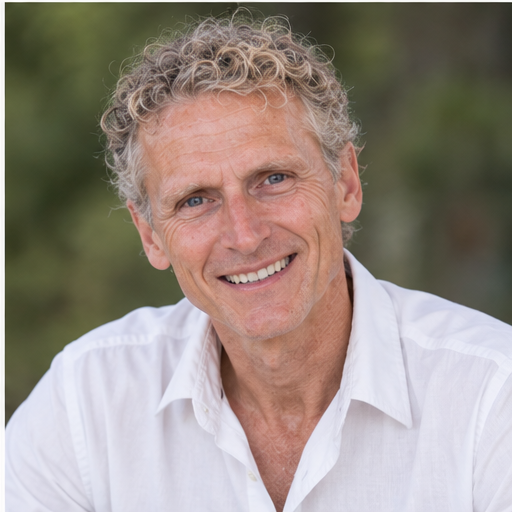
A career spent where deterioration becomes real — combined with long experience teaching laypeople and operating in the environments FieldSafe serves.
I have spent decades around deterioration, resuscitation and high-acuity care, and more than 25 years inside retreat, bodywork and altered-state environments. Those worlds often use very different language.
Retreat teams do not need to become clinicians. They do need to recognise when the usual explanation no longer fits, when somebody is genuinely becoming unwell, and when delay is becoming the unsafe choice.
FieldSafe exists to translate deep emergency experience into practical judgement, calm team behaviour and better systems for the environments I genuinely understand.
Technical competence matters in an emergency. So does the way a team works around it.
Earlier in my career I was selected into advanced resuscitation instructor training not only because I could perform technically, but because of how I communicated, supported weaker candidates and worked within the team. Years later, on a separate ILS course, a senior resuscitation figure who had no prior reason to favour me independently identified the same qualities while I was helping other candidates who were struggling.
I do not present that as a current instructor title. I use it because it shaped how I think about emergency leadership: the strongest response is rarely one person doing everything. It is a calm team in which people understand their roles, feel safe enough to speak and know when to escalate.
Competence used in service of the team, not competence used to establish status.
I have spent much of my working life in environments where somebody has to notice the change, organise the response and keep thinking while everyone else is under pressure.
That has included high-acuity emergencies, resuscitation teaching, senior event operations and years inside retreat and altered-state spaces. FieldSafe grew from seeing the same gap repeatedly: thoughtful, experienced teams can understand their setting deeply and still need a clearer way to recognise when the medical picture no longer fits the expected process.
The aim is not to turn retreat crews into clinicians. It is to give capable people better judgement, clearer roles and a system they can actually use when somebody needs help.
That experience includes frontline high-acuity emergencies, advanced resuscitation teaching, senior responsibility on festival sites and the practical realities of getting teams, equipment and emergency services coordinated when conditions are less than ideal.
Do not let familiarity with the setting explain away a person who is genuinely deteriorating.
Give the core team roles, language and confidence so one person can keep the overview while others act.
Access, communications, equipment, emergency information and rehearsal should work before the first casualty appears.
FieldSafe is strongest where emergency judgement, teaching, operations and retreat culture overlap.
More than three decades around cardiac, critical-care and high-acuity environments, where subtle deterioration, escalation and team coordination are everyday concerns.
Previous Advanced Life Support instructor experience, ALS provider experience, long-standing BLS/AED teaching, and senior event roles where somebody has to maintain the overview when pressure rises.
More than 25 years across retreat, bodywork and altered-state environments as practitioner, participant and student, including acupuncture, kinesiology, herbal and plant traditions, energetic healing and plant-medicine / ceremonial settings. That breadth matters because FieldSafe has to understand the context without allowing the context to explain away genuine illness.
FieldSafe is not generic first-aid training with retreat language added afterwards. It comes from long familiarity with the practices, beliefs, pressures and ambiguities that can exist in these spaces.
Experience across bodywork, acupuncture, kinesiology, energetic practice, breathwork and plant-medicine environments helps distinguish expected context from warning signs that deserve a medical explanation.
Retreat language can shape how symptoms are interpreted. FieldSafe teaches teams to respect the setting while still asking the second question: could this be something else?
Teams need clear consent, documentation, escalation and role boundaries. FieldSafe addresses practical duty-of-care thinking and operational consequences without pretending to provide legal advice.
FieldSafe is about translating what experienced practitioners notice into observations, questions and actions a non-clinical team can actually use.
Breathing, colour, responsiveness, circulation, fluid balance and trajectory — especially when retreat context risks explaining away deterioration.
Not every concern needs an ambulance. But teams need to recognise when watch-and-wait is becoming the dangerous choice.
Training, access, communications, equipment, emergency information and clear roles all reduce avoidable delay.
Explore training, readiness and FieldSafe SOS.
Explore FieldSafeAsk the difficult question. The point is to know who you are trusting with your people, not to be impressed by a biography.